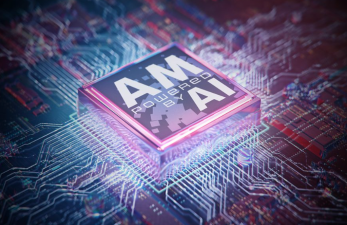
With the rapid development of technology, artificial intelligence (AI) has gradually transformed from a science fiction fantasy into an important part of real life. However, this is just the beginning. As we look to the future, how will AI continue to evolve and impact our lives, work, and social structures? Since its inception, generative AI has been constantly evolving. We have seen developers at companies like OpenAI and Meta move from large models to smaller, cheaper models, improving AI models to accomplish the same or more work with fewer resources. As models like ChatGPT become more intelligent and better able to understand the nuances of human language, hinting engineering is changing. Because LLMs are trained with more specific information, they can provide deep expertise to specialized industries, becoming agents ready to help accomplish tasks.
AI is not a fleeting technology. It is not a phase. More than 60 countries and regions have developed national AI strategies to leverage the advantages of AI while mitigating its risks. This means significant investment in R&D, reviewing and adjusting relevant policy standards and regulatory frameworks, and ensuring that the technology does not undermine fair labor markets and international cooperation.
How AI Will Continue to Evolve in the Next 10 Years
From now until 2034, AI will become an integral part of every aspect of our personal and business lives. Generative AI models like GPT-4 have shown tremendous promise in a short time since they became publicly available, but their limitations are also well-known. The future of AI will be defined by a shift towards large-scale, open-source models for experimentation, and the development of smaller, more efficient AI models to improve usability and reduce costs.
Initiations such as Llama 3.1 (an open-source AI model with 400 billion parameters) and Mistral Large 2, released for research purposes, demonstrate a trend towards fostering community collaboration in AI projects while upholding commercial rights. The growing interest in smaller models has led to the creation of AI models like the mini GPT-4o-mini, which are fast and cost-effective. Soon, models suitable for embedding in devices such as smartphones will be available, especially as costs continue to decrease.
This trend reflects a shift from single, large, closed models to more accessible and versatile AI solutions. While smaller models offer affordability and efficiency, the public demand for more powerful AI systems remains, suggesting a potential balanced approach in AI development that prioritizes scalability and accessibility. These new models deliver higher accuracy with fewer resources, making them ideal for businesses requiring customized content creation or complex problem-solving capabilities.
AI is impacting the development of several core technologies. AI plays a crucial role in advancing computer vision by enabling more accurate image and video analytics, essential for technologies like autonomous vehicles and medical diagnostics. In Natural Language Processing (NLP), AI enhances machines' ability to understand and generate human language, improves communication interfaces, and enables more sophisticated translation and sentiment analysis tools.
AI improves predictive and big data analytics capabilities by processing and interpreting massive amounts of data to predict trends and inform decision-making. In robotics, the development of more autonomous and adaptive machines simplifies tasks such as assembly, exploration, and service delivery. Furthermore, AI-driven Internet of Things (IoT) innovations enhance device connectivity and intelligence, making home, city, and industrial systems more intelligent.
AI in 2034
Here are some of the AI advancements we should see a decade from now:
The State of Multimodal AI
The nascent field of multimodal AI will be fully tested and refined by 2034. Monomodal AI focuses on a single data type, such as NLP or computer vision. In contrast, multimodal AI is more akin to how humans communicate by understanding data in vision, speech, facial expressions, and tone of voice. This technology will integrate text, speech, images, video, and other data to create more intuitive interactions between humans and computer systems. It has the potential to power advanced virtual assistants and chatbots, enabling them to understand complex inquiries and provide customized text, visual aids, or video tutorials as responses.
Democratization of AI and Easier Model Creation
Driven by user-friendly platforms, AI will further integrate into personal and professional fields, allowing non-experts to use commercial AI for business, personal tasks, research, and creative projects. These platforms, similar to today's website builders, will enable entrepreneurs, educators, and small businesses to develop customized AI solutions without requiring deep technical expertise.
API-driven AI and microservices will enable businesses to integrate advanced AI capabilities into existing systems in a modular fashion. This approach will accelerate the development of custom applications without requiring extensive AI expertise.
For businesses, easier model creation means faster innovation cycles and customized AI tools for each business function. No-code and low-code platforms will allow non-technical users to create AI models using drag-and-drop components, plug-and-play modules, or guided workflows. Since many of these platforms are LLM-based, users can also query AI models using prompts.
Automated machine learning platforms are rapidly improving, automating tasks such as data preprocessing, feature selection, and hyperparameter tuning. Over the next decade, automated machine learning will become more user-friendly and accessible, enabling people to quickly create high-performance AI models without specialized knowledge. Cloud-based AI services will also provide businesses with pre-built AI models that can be customized, integrated, and extended as needed.
For hobbyists, easily accessible AI tools will foster a new wave of personal innovation, enabling them to develop AI applications for personal projects or side hustles.
Open-source development can increase transparency, while careful governance and ethical guidelines can help maintain high security standards and build trust in AI-driven processes. This easily accessible final form could be a fully voice-controlled, multimodal virtual assistant capable of creating visual, textual, audio, or other visual assets on demand.
While this is speculative, if general artificial intelligence (AGI) systems emerge by 2034, we might see the dawn of AI systems capable of autonomously generating and curating their own training datasets, thus achieving self-improvement and adaptation without human intervention.
Illusion Insurance
As generative AI becomes more centralized within organizations, companies may begin offering “AI illusion insurance.” Despite extensive training, AI models can still provide incorrect or misleading results. These errors often stem from insufficient training data, flawed assumptions, or biases in the training data.
Such insurance could protect financial institutions, the healthcare industry, the legal industry, and others from accidental, inaccurate, or harmful AI outputs. Insurers could cover the financial and reputational risks associated with these errors, similar to how financial fraud and data breaches are handled.
AI in Senior Management
AI decision-making and predictive modeling will evolve to the point where AI systems act as strategic business partners, helping executives make informed decisions and automate complex tasks. These AI systems will integrate real-time data analytics, context awareness, and personalized insights to provide tailored recommendations aligned with business objectives, such as financial planning and customer outreach.
Improved NLP will enable AI to engage in conversations with leadership, providing recommendations based on predictive modeling and scenario planning. Businesses will rely on AI to simulate potential outcomes, manage cross-departmental collaboration, and refine strategies based on continuous learning. These AI partners will enable smaller businesses to scale faster and operate with similar efficiency to large enterprises.
Major Advances in Quantum Technology
Quantum AI, utilizing the unique properties of qubits, may break the limitations of traditional AI by solving problems previously unsolvable due to computational constraints. Complex materials simulation, optimization of large-scale supply chains, and exponentially growing large datasets may become feasible in real time. This could transform scientific research, with AI pushing the boundaries of exploration in physics, biology, and climate science by simulating scenarios that would take traditional computers thousands of years to process.
A major obstacle to development is the significant time, effort, and cost required to train large models such as Large Language Models (LLMs) and neural networks. Current hardware requirements are nearing the limits of traditional computing infrastructure, which is why innovation will focus on enhancing hardware or creating entirely new architectures. Quantum computing offers a promising path for AI innovation because it could significantly reduce the time and resources required to train and run large AI models.
Beyond Binary
The Bitnet model uses ternary parameters, a base-3 system that uses three digits to represent information. This approach allows AI to process information more efficiently by relying on multiple states rather than binary data (0s and 1s), thus addressing energy concerns. This could potentially speed up computation while reducing power consumption.
Y Combinator-backed startups and others are investing in dedicated silicon hardware tailored to the Bitnet model, which could significantly accelerate AI training time and reduce operating costs. This trend suggests that future AI systems will combine quantum computing, the Bitnet model, and dedicated hardware to overcome computational limitations.
Regulations and AI Ethics
For AI to become widespread, significant progress must be made in AI regulations and ethical standards. Driven by the EU AI Act framework, a key development will be the establishment of rigorous risk management systems that categorize AI into different risk levels and impose stricter requirements on high-risk AI. AI models, especially generative and large-scale models, may need to meet standards of transparency, robustness, and cybersecurity. Following the EU AI Act, which sets standards for healthcare, finance, and critical infrastructure, these frameworks are likely to expand globally.
Ethical considerations will influence regulation, including banning systems that pose unacceptable risks, such as social scoring in public places and remote biometrics. AI systems must be subject to human oversight, protect fundamental rights, address issues of bias and fairness, and ensure responsible deployment.
AI, Agentic AI
AI that proactively anticipates demand and makes autonomous decisions may become a central part of personal and business life. Agentic AI refers to systems composed of independently operating specialized agents, each handling a specific task. These agents interact with data, systems, and people to complete multi-step workflows, enabling businesses to automate complex processes such as customer support or network diagnostics. Unlike monolithic Large Language Models (LLMs), agentic AI adapts to real-time environments, using simpler decision-making algorithms and feedback loops to learn and improve.
A key advantage of agentic AI lies in its division of labor between LLMs that handle general tasks and domain-specific agents that provide deep expertise. This division helps mitigate the limitations of LLMs. For example, in a telecommunications company, an LLM might categorize customer queries, while a specialized agent retrieves account information, diagnoses problems, and develops solutions in real time.
By 2034, these agentic AI systems could become the management hub for everything from business workflows to smart homes. Their ability to autonomously predict demand, make decisions, and learn from their environment could make them more efficient and cost-effective, complementing the general functionality of LLMs and increasing the accessibility of AI across industries.
Data Usage
As human-generated data becomes scarce, enterprises are turning to synthetic data—artificial datasets that mimic real-world patterns, freed from the resource limitations and ethical concerns of human-generated data. This approach will become the standard method for training AI, improving model accuracy while promoting data diversity. AI training data will include satellite imagery, biometric data, audio logs, and IoT sensor data.
The rise of custom models will be a key trend in AI, as enterprises use proprietary datasets to train AI tailored to their specific needs. These models, designed for content generation, customer interaction, and process optimization, outperform general-purpose LLMs by being closely integrated with the organization's unique data and context. Enterprises will invest in data quality assurance, ensuring that both real and synthetic data meet high standards of reliability, accuracy, and diversity, while maintaining AI performance and ethical integrity.
The challenges posed by “shadow AI” (unauthorized AI tools used by employees) will drive organizations to implement stricter data governance, ensuring that only approved AI systems have access to sensitive proprietary data.
Conclusion
The future of artificial intelligence will be a field full of limitless possibilities. It will continuously drive technological development and innovation, bringing more convenience and well-being to human society. However, we should also be keenly aware of the challenges and problems brought about by artificial intelligence and actively seek solutions to address these challenges. Only in this way can we ensure that artificial intelligence benefits humanity without harming our interests and values.